What Fullblood Wagyu actually is, how marbling grades work, how it compares to Angus and American Wagyu, and how to cook it at home. Everything a serious beef buyer needs to know.
Wagyu (和牛) literally means "Japanese cow" — a term covering four Japanese cattle breeds: Kuroge (Black), Akage (Brown), Nihon Tankaku (Shorthorn), and Mukaku (Polled). Of these, Kuroge Washu is the breed responsible for the legendary marbling and flavor that Wagyu is known for worldwide.
What makes Wagyu fundamentally different from other beef is genetics. Wagyu cattle carry a unique fat metabolism that deposits fat intramuscularly — inside the muscle fiber itself — rather than just around it. This intramuscular fat is what creates the rich marbling you see in a premium Wagyu ribeye, and it's what produces the butter-like texture and deep, complex flavor that regular beef simply cannot replicate.
Wagyu was exported from Japan in the 1970s and 1980s. Today, Fullblood Wagyu herds are raised across the United States, Australia, and other countries — maintaining 100% Wagyu genetics through rigorous genetic registration.
Diamond Crest Standard
Every animal in our herd is genetically verified Fullblood Wagyu or Red Angus. No crossbreeding. No shortcuts. We raise our cattle on open pasture and finish them on a custom grain ration — the same way premium Wagyu is raised in Japan.
Fullblood vs. American Wagyu
This is one of the most important distinctions in the Wagyu market — and one that many retailers obscure.
Fullblood Wagyu (100%)
Fullblood Wagyu cattle have 100% verified Wagyu genetics, typically registered with the American Wagyu Association or equivalent body. Both parents are 100% Wagyu. The result is maximum marbling potential — BMS 6 to 12 — and the authentic flavor profile that defines the breed.
American Wagyu (Crossbred)
"American Wagyu" is a marketing term for crossbred cattle — most commonly a Wagyu × Angus cross. F1 (first cross) animals are 50% Wagyu. F2 animals are 75% Wagyu. While crossbreds can be excellent beef, they do not produce the same level of marbling or the same flavor as Fullblood Wagyu, and they should not be priced or marketed as equivalent.
F1 / American Wagyu — 50% Wagyu, 50% Angus. Moderate marbling. More accessible price.
Wagyu-influenced — Any marketing term for beef with some Wagyu ancestry below 50%.
Diamond Crest sells Fullblood Wagyu and Red Angus — we are transparent about breed and genetics on every product.
Understanding Marbling & BMS Grades
Marbling is the white flecks and streaks of intramuscular fat visible throughout a cut of beef. More marbling = more flavor, more tenderness, more juiciness. The Beef Marbling Score (BMS) is the international standard for measuring it.
BMS Score
Equivalent Grade
Description
1–2
USDA Select
Minimal marbling. Lean, firm texture.
3–4
USDA Choice / Prime
Moderate marbling. Good flavor. Standard supermarket top tier.
5–6
Entry-level Wagyu
Noticeably richer, more tender. The floor of real Wagyu quality.
Maximum marbling. Resembles A5 Japanese Wagyu. Small portions recommended.
USDA grading (Select, Choice, Prime) only goes up to Prime — which is roughly BMS 4. Everything above that requires the BMS scale, which is why Wagyu is not simply "USDA Prime." It operates on a different plane entirely.
Wagyu vs. Angus: What's the Difference?
Angus — both Black and Red — is the most widely raised beef breed in the United States, and for good reason. It produces consistent, well-marbled, flavorful beef with a proven track record. Our Red Angus line is a testament to that.
But Wagyu is in a different category. The comparison is not that one is "better" — they are different experiences:
Angus — Bold, beefy, full flavor. Clean finish. Excellent for grilling. USDA Prime Angus is genuinely exceptional beef. $20–$60 per pound for premium cuts.
Wagyu — Rich, buttery, complex. Fat melts at body temperature. The flavor lingers. Smaller portions satisfy. $60–$200+ per pound for Fullblood cuts.
We sell both because they serve different occasions. A Red Angus tomahawk is a celebration. A Wagyu ribeye is an experience unto itself.
How to Cook Wagyu at Home
Wagyu's high fat content means it cooks faster and at lower temperatures than conventional beef. Most people make the mistake of cooking it like a standard steak — high heat for too long. Here's how to do it right:
The Essentials
Thaw properly — Move from freezer to refrigerator 24 hours before cooking. Never microwave-defrost.
Bring to room temperature — Rest on the counter for 30–45 minutes before cooking.
Season simply — Flaky sea salt only. Pepper after cooking, if at all. Let the beef speak.
Dry heat, no oil — Cast iron or carbon steel. No added butter or oil — the Wagyu fat is its own cooking medium.
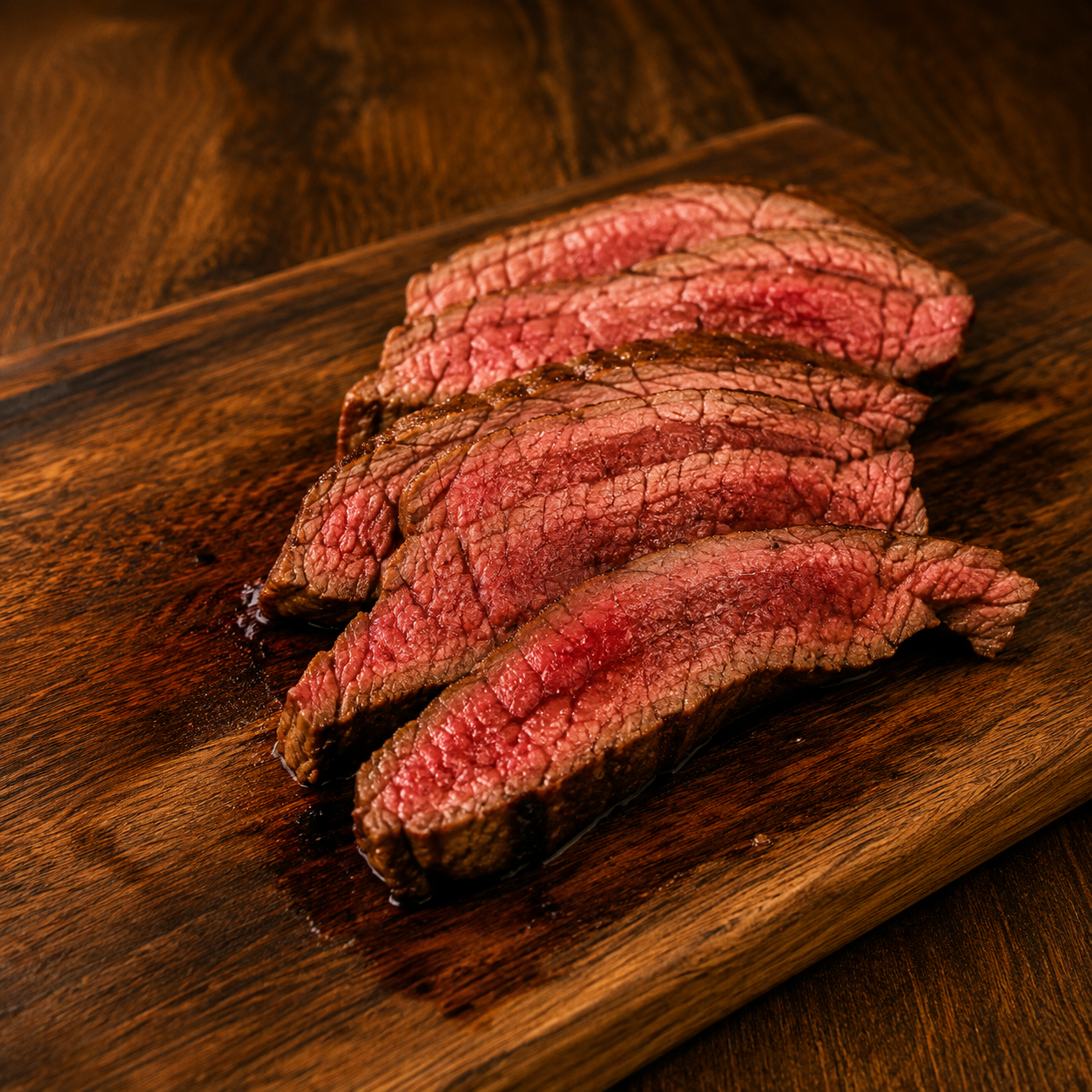
High heat, short time — Sear 2–3 minutes per side for a 1-inch cut. Medium-rare (125–130°F internal) is the sweet spot.
Rest — 5 minutes tented in foil. Non-negotiable.
Cut thin, serve small — Wagyu is rich. 3–4 oz per person is satisfying for a Fullblood cut.
Cooking Methods by Cut
Ribeye / NY Strip — Cast iron sear. Do not use a grill grate (fat drip causes flare-ups and char).
Tenderloin — Sear then finish in a 400°F oven for 4–5 minutes for even heat.
Brisket / Short Rib — Low and slow. 225°F for 8–12 hours. The marbling melts into the meat.
Ground Wagyu — Medium-high heat in a dry pan. No pressing. Smash-burger style is excellent.
Chef's Note
The number one mistake with Wagyu is overcooking it. Medium-rare is the ceiling. At medium, the fat has fully rendered and the magic is gone. Trust the thermometer: pull it at 125°F internal, rest to 130°F.
Why Diamond Crest Wagyu
There is no shortage of companies selling "Wagyu" online. The difference at Diamond Crest is transparency and genetics. We sell Fullblood Wagyu — not crossbreds, not Wagyu-influenced, not American Wagyu blends marketed at Fullblood prices.
Genetically verified — Every animal in our herd is registered Fullblood Wagyu or Red Angus.
Pasture-raised — Our cattle graze on open pasture before finishing on a custom grain ration.
Hand-cut to order — We don't warehouse pre-cut beef. Your order is cut and packed fresh.
Vacuum-sealed & flash-frozen — Maintains full quality from our cooler to your kitchen.
No middlemen — Direct from Diamond Crest to your door. Transparent pricing, no distributor markup.
Fullblood Wagyu is cattle with 100% verified Wagyu genetics — no crossbreeding with Angus or any other breed. Fullblood Wagyu produces the highest levels of intramuscular fat (marbling) of any beef breed in the world, resulting in unrivaled tenderness, buttery flavor, and rich umami.
"American Wagyu" typically refers to crossbred cattle that are part Wagyu and part Angus (usually F1 or F2 crosses, meaning 50%–75% Wagyu genetics). Fullblood Wagyu is 100% Wagyu — producing significantly more marbling, a higher BMS score, and a more pronounced flavor profile.
BMS (Beef Marbling Score) runs from 1 to 12. USDA Prime beef scores BMS 2–4. Australian Wagyu grades use an equivalent MS 1–9+ scale. Fullblood Diamond Crest Wagyu typically grades BMS 6–12 depending on the cut and animal.
Wagyu has a lower melting point than regular beef fat. Cook on high heat in a dry cast iron pan — no added oil needed. Season with just salt. For a 1-inch cut, 2–3 minutes per side for medium-rare. Let it rest 5 minutes. Less is more: do not overcook Wagyu.
Wagyu commands a premium because raising Fullblood cattle takes 26–30 months (vs 18 for conventional beef) and requires specialized feed and care. The taste difference — the intense marbling, the buttery texture, the deep beef flavor — is dramatic. Most people who try it describe it as a fundamentally different food from regular steak.
Every order is vacuum-sealed, flash-frozen at peak freshness, and shipped in insulated packaging to maintain temperature during transit. We ship to all 50 US states via express carriers to ensure the beef arrives frozen and ready to cook or store.
Red Angus is a heritage breed prized for consistent marbling, exceptional flavor, and tender texture. Diamond Crest Red Angus is pasture-raised, grain-finished, and graded USDA Choice or Prime. It offers a more accessible price point than Wagyu while still delivering outstanding quality.
Ready to taste the difference?
Shop Fullblood Wagyu and Red Angus cuts — hand-cut, vacuum-sealed, shipped frozen to your door.
Hello! I'm Diamond, your wagyu concierge. Whether you're picking a cut for a special occasion or curious about the difference between Fullblood Wagyu and Red Angus — I'm here. What can I help you find today?